As an Amazon Associate, I earn from qualifying purchases. This post may contain affiliate links. If you click and buy through these links, I may earn a small commission at no extra cost to you.
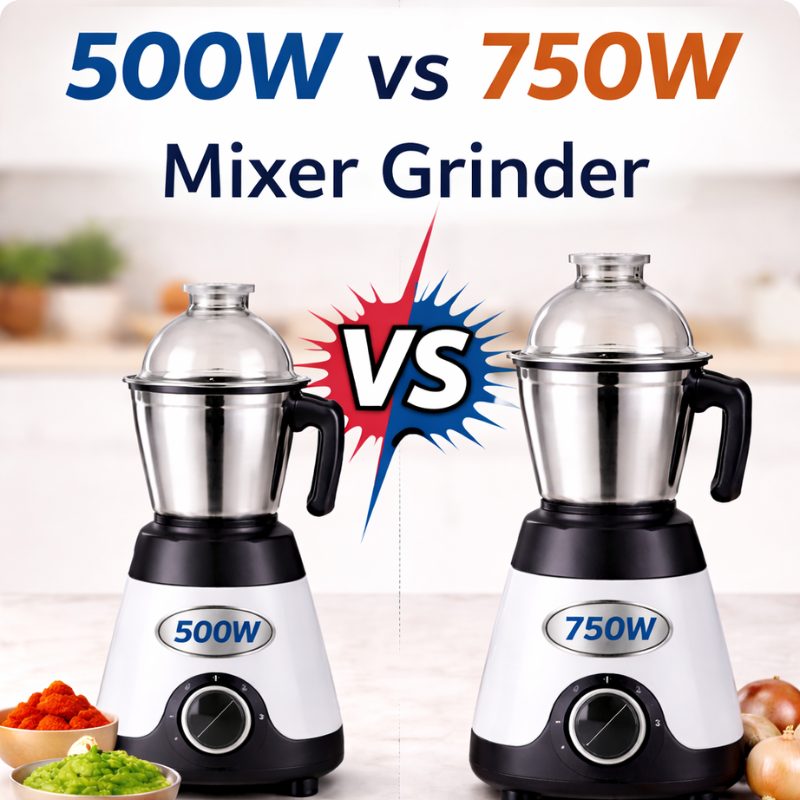
Choosing between a 500W and 750W mixer grinder can be confusing, especially when both options are widely available in India. The higher wattage can provide more motor capacity, but that does not automatically make a 750W model the right choice for every kitchen.
A 500W mixer grinder can be practical for small batches, chutneys, pastes and lighter everyday tasks. A 750W model can make more sense when you regularly grind tougher ingredients, prepare larger batches or use the mixer more frequently.
In this guide, we compare 500W and 750W mixer grinders based on coconut chutney, dry masala, dosa and idli batter, batch size, electricity use, noise, jar requirements and everyday cooking frequency.
Why Motor Power Matters in a Mixer Grinder
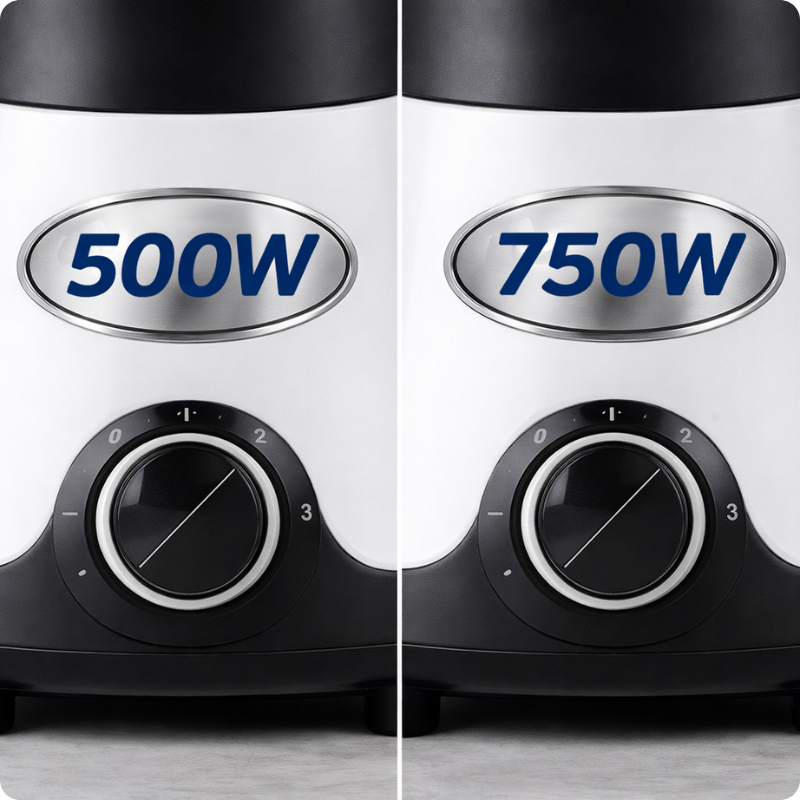
Motor wattage is one factor that indicates the electrical power rating of the motor. A higher-rated motor may be better suited to demanding loads, but actual grinding performance also depends on the jar design, blade assembly, ingredient quantity, operating time and the manufacturer’s instructions.
So, wattage should be treated as one part of the buying decision rather than a guarantee of grinding quality or durability.
- Faster grinding speed
- Smoother texture for batters and pastes
- Better handling of tough ingredients
- Longer motor life under regular use
Choosing the wrong motor power can lead to overheating, poor grinding results, and shorter appliance life.
What Is a 500W Mixer Grinder Best For?
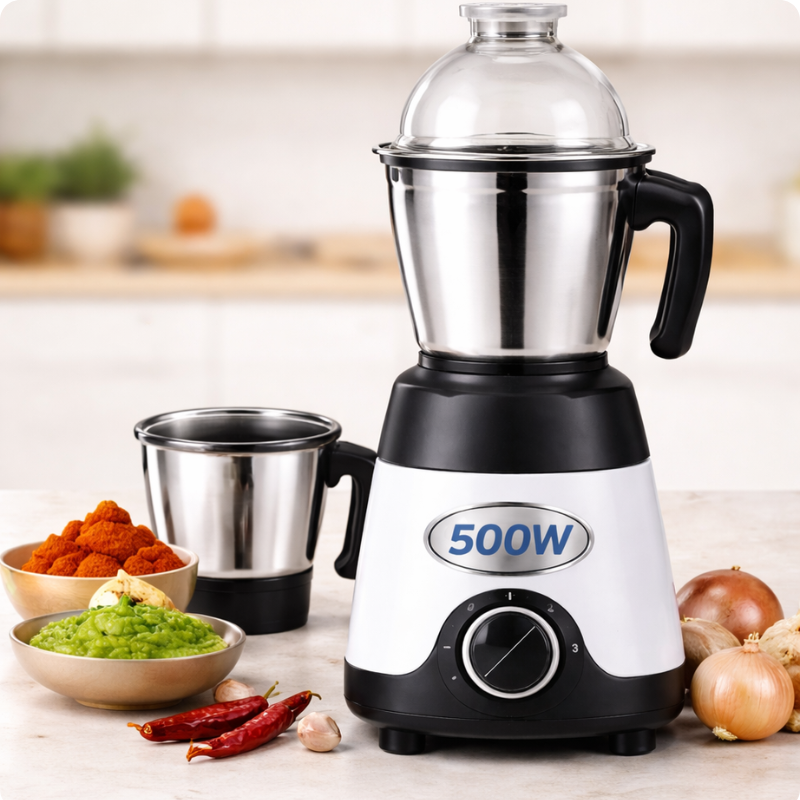
A 500W mixer grinder is designed for light to moderate kitchen tasks and is suitable for small households.
Ideal Uses of a 500W Mixer Grinder
- Grinding soft spices
- Making chutneys and pastes
- Blending milkshakes and smoothies
- Occasional batter preparation
Pros of 500W Mixer Grinder
- Lower price range
- Consumes less electricity
- Compact and lightweight design
- Usually produces less noise
Cons of 500W Mixer Grinder
- Struggles with hard spices like turmeric and pepper
- Not suitable for thick dosa or idli batter
- Motor heats faster during continuous use
- May need more care and shorter grinding cycles when used for demanding loads
What Is a 750W Mixer Grinder Best For?
For many Indian households, 750W is a practical middle-ground option because it offers more capacity for demanding grinding than many 500W models without requiring the higher power rating of some 900W or 1000W models.
Ideal Uses of a 750W Mixer Grinder
- Grinding hard spices and dry masalas
- Making thick dosa, idli, and vada batter
- Grinding coconut and soaked rice
- Daily and continuous kitchen use
Pros of 750W Mixer Grinder
Pros
- Powerful motor for tough grinding tasks
- Faster and smoother grinding results
- Handles heavy load without overheating
- Longer durability and better reliability
Cons
- Slightly higher price than 500W models
- Consumes a bit more electricity
- Produces more noise in some models
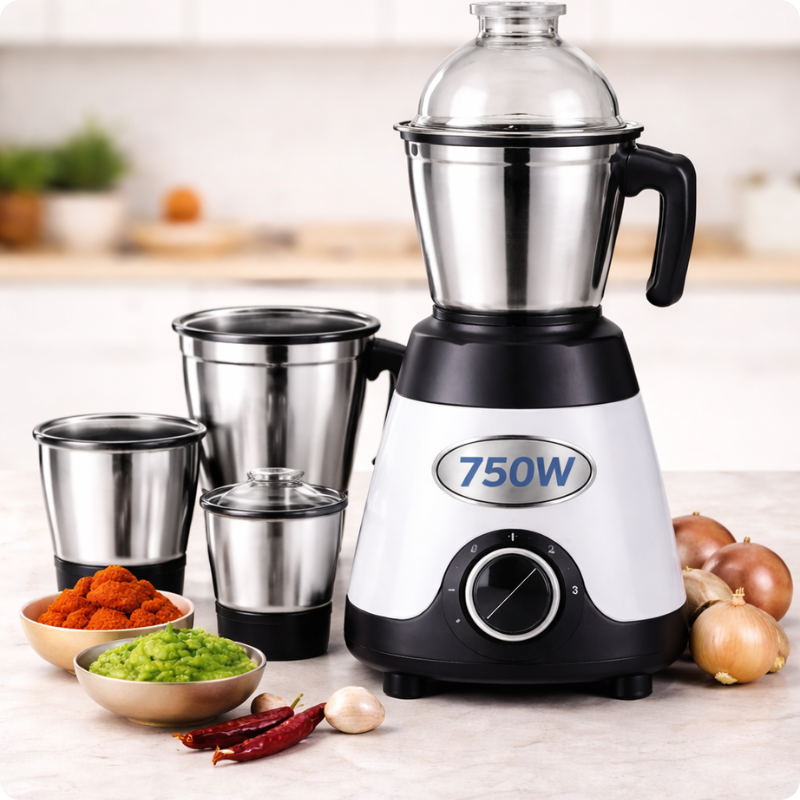
500W vs 750W Mixer Grinder – Detailed Comparison
This table clearly shows the main difference between 500W vs 750W mixer grinder:
| Feature | 500W Mixer Grinder | 750W Mixer Grinder |
| Light grinding | Suitable | Suitable |
| Small chutney batches | Suitable | Suitable |
| Coconut chutney | Suitable for small batches | Suitable for regular/larger use |
| Dosa/idli batter | Small or occasional batches | More suitable for frequent use |
| Typical price | Usually lower | Usually higher |
| Electricity rating | Lower | Higher |
| Best suited for | Light/occasional users | Regular or more demanding users |
| Dry spice grinding | Better for smaller batches | More suitable for frequent/heavier use |
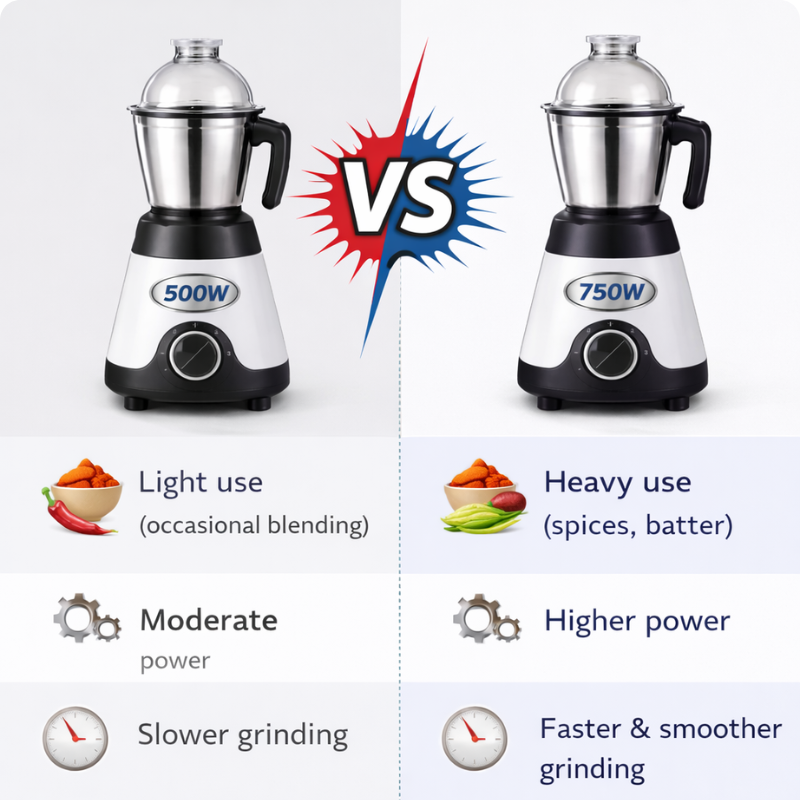
Which Is Better: 500W or 750W?
There is no universal winner.
Choose 500W if you mainly:
- Prepare small chutney batches
- Make simple pastes
- Blend smoothies
- Grind occasionally
- Want a lower-cost appliance
Choose 750W if you:
- Grind spices regularly
- Prepare chutneys and pastes frequently
- Make small or moderate batter batches
- Use the mixer more often
- Want more motor capacity for demanding tasks
For many Indian households with regular cooking, 750W is the more versatile starting point, but a 500W model can be perfectly adequate for lighter use.
Choose a 500W Mixer Grinder If:
- You live alone or in a small family
- You mostly prepare chutneys and light grinding
- You use the mixer grinder occasionally
- You are on a tight budget
Choose a 750W Mixer Grinder If:
- You cook Indian food daily
- You prepare dosa, idli, and vada batter often
- You grind hard spices regularly
- You want better performance and long‑term durability
500W vs 750W for Coconut Chutney
For coconut chutney, both 500W and 750W mixer grinders can be suitable depending on the quantity and the model’s jar design.
500W may be enough when:
- You prepare small batches
- You grind chutney occasionally
- You use an appropriately sized chutney jar
750W may make more sense when:
- You prepare chutney frequently
- You make larger batches
- You also use the mixer for spices, pastes and other demanding tasks
For coconut chutney, don’t compare wattage alone. Jar shape, chutney-jar capacity and blade design also matter.
For more detailed recommendations, see our Best Mixer Grinder for Coconut Chutney guide.
500W vs 750W for Dosa and Idli Batter
Batter is a more demanding task than making a small chutney because the mixture can become thick and the grinding process may take longer.
A 500W mixer grinder can be practical for small or occasional batter batches, provided the manufacturer allows the task and the jar capacity is appropriate.
If you prepare dosa or idli batter more frequently, a 750W model can provide more motor capacity for this type of workload.
However, a mixer grinder is not automatically a replacement for a wet grinder. If you regularly prepare large batches of batter, a dedicated wet grinder may be more suitable.
See our Best Mixer Grinder for Idli & Dosa Batter guide for a more detailed comparison.
500W vs 750W for Dry Masala Grinding
Small quantities of relatively easy-to-grind spices may be manageable with a 500W mixer grinder. But if dry spice grinding is a regular part of your cooking, a 750W model may offer more headroom for demanding batches.
More importantly, use the correct dry-grinding jar, avoid overfilling it and follow the manufacturer’s operating instructions.
If dry masala grinding is your main requirement, see our Best Mixer Grinder for Dry Masala & Spice Grinding guide.
Does a 750W Mixer Grinder Consume More Electricity?
Yes. If both motors run for the same amount of time, a 750W motor is rated to use more electrical power than a 500W motor.
But actual electricity consumption depends on:
- How long you run the mixer
- How frequently you use it
- The actual load
- The appliance’s operating pattern
For example, running a 750W mixer for a shorter period can change the practical difference compared with running a 500W model for longer. Therefore, don’t choose between 500W and 750W based only on electricity consumption.
Best Mixer Grinder Power Recommendation
Based on Indian cooking habits and daily usage patterns:
- Best choice for most homes: 750W mixer grinder
- Best choice for light use: 500W mixer grinder
👉 Looking for the best models? Read our detailed guide on Best Mixer Grinder in India (2026) to compare top-rated options and choose the perfect mixer grinder for your kitchen.
Frequently Asked Questions – 500W vs 750W Mixer Grinder
Is 500W enough for Indian cooking?
Yes, but only for light cooking and occasional use. For regular Indian cooking, a 750W mixer grinder is better.
Is 750W mixer grinder very noisy?
It is slightly louder than 500W models, but modern designs reduce vibration and noise significantly.
Which motor lasts longer, 500W or 750W?
A 750W mixer grinder usually lasts longer because it handles heavy loads more easily.
Is 500W enough for coconut chutney?
Yes. A 500W mixer grinder can be suitable for small coconut chutney batches when used with an appropriate chutney jar and according to the manufacturer’s instructions.
Can a 500W mixer grinder make dosa batter?
It can be suitable for small or occasional batches, but frequent or larger batter preparation may be better suited to a more powerful mixer grinder or a dedicated wet grinder.
Does 750W consume more electricity than 500W?
Yes, for the same running time, a 750W motor has a higher power rating. Actual consumption depends on usage time and frequency.
Is 750W always better than 500W?
No. 750W offers more motor capacity, but 500W can be sufficient for light cooking and small batches.
Which is better for South Indian cooking?
For regular South Indian cooking involving chutneys, spices and occasional batter, 750W can be a versatile option. But small households with lighter use may be comfortable with 500W.
Which is better for hard spices?
A 750W model may be more suitable for frequent or demanding dry-spice grinding, but the dry-grinding jar, blade design and batch size also matter.
Does 750W make smoother batter?
Not automatically. Batter quality depends on the appliance’s jar, blade design, ingredient quantity, grinding process and other factors.
Should I buy 500W or 750W for a small family?
The choice between a 500W and 750W mixer grinder depends more on how you cook than on wattage alone.
A 500W mixer grinder can be a sensible choice for small households, light grinding, chutneys, pastes and occasional use. A 750W mixer grinder is a better fit when you regularly grind spices, prepare chutneys and pastes, or make small to moderate batches of batter.
If you’re still unsure, look beyond wattage and compare the jar capacity, blade design, overload protection, warranty and service support of the specific models you are considering.
For most households with regular Indian cooking, 750W is a practical all-round starting point. For lighter users, 500W can offer better value without paying for power they may not need.
👉 Ready to buy? Check our recommended 750W mixer grinders and choose the perfect model for your kitchen today.
“Note: Images shown are for illustration purposes only. Actual product design, color, and features may vary.”